
Layer by Layer will open for registration on Sunday the 18th of October at 8pm ( UK time).
It’s been three years since I last launched a new correspondence course. In that time I’ve taught literally thousands of you how to make dolls, to explore characters and to bring out the creative parts of yourself that may have been lying dormant and hidden. It’s been an absolute privilege. Behind the scenes, in my own work, I’ve found myself being drawn back to the fundamental processes of constructing textiles.
This was my first love. Twisting, knotting, tangling, layering, tearing, stitching; transforming cloth and yarn and fibre into forms and patterns that take on a whole new life of their own. These processes have always been there for me, but returned to my creative work in full force after my second trip to Mexico, when we visited Chiapas.
Kathie Vezzani of Bellissima Art Escapes took me to the textile museum in San Cristobal de las Casas, and while the rest of our group wandered around with our guide, Kathie took me to look through the many drawers of embroidery and weaving by the Indigenous artisans.
Have you ever felt a palpable vibration from a piece of artwork? A sense of it having it’s own life, it’s own history, it’s own story, and that it has a grasp on you that compels you to sit with it, just to be near it? What I’ve always found with hand made textiles, and particular hand sewn textiles is that they have such a tangible sense of the artist who made them. In stitch you can literally see the traces of the movements of their hands. Each thread that was drawn through and into and across the cloth. You can sense the mood of the artist, the tension in their hands, their relationship to every thread and scrap of cloth.
On that particular day in Chiapas, when I was exhausted from travelling half way around the world, over heated and over stimulated, what I found in those museum drawers and cabinets was not only peace, but resonance. A sense of my place among those artists whose hands and stitched and layered the cloth, and twisted and wrapped the yarns.
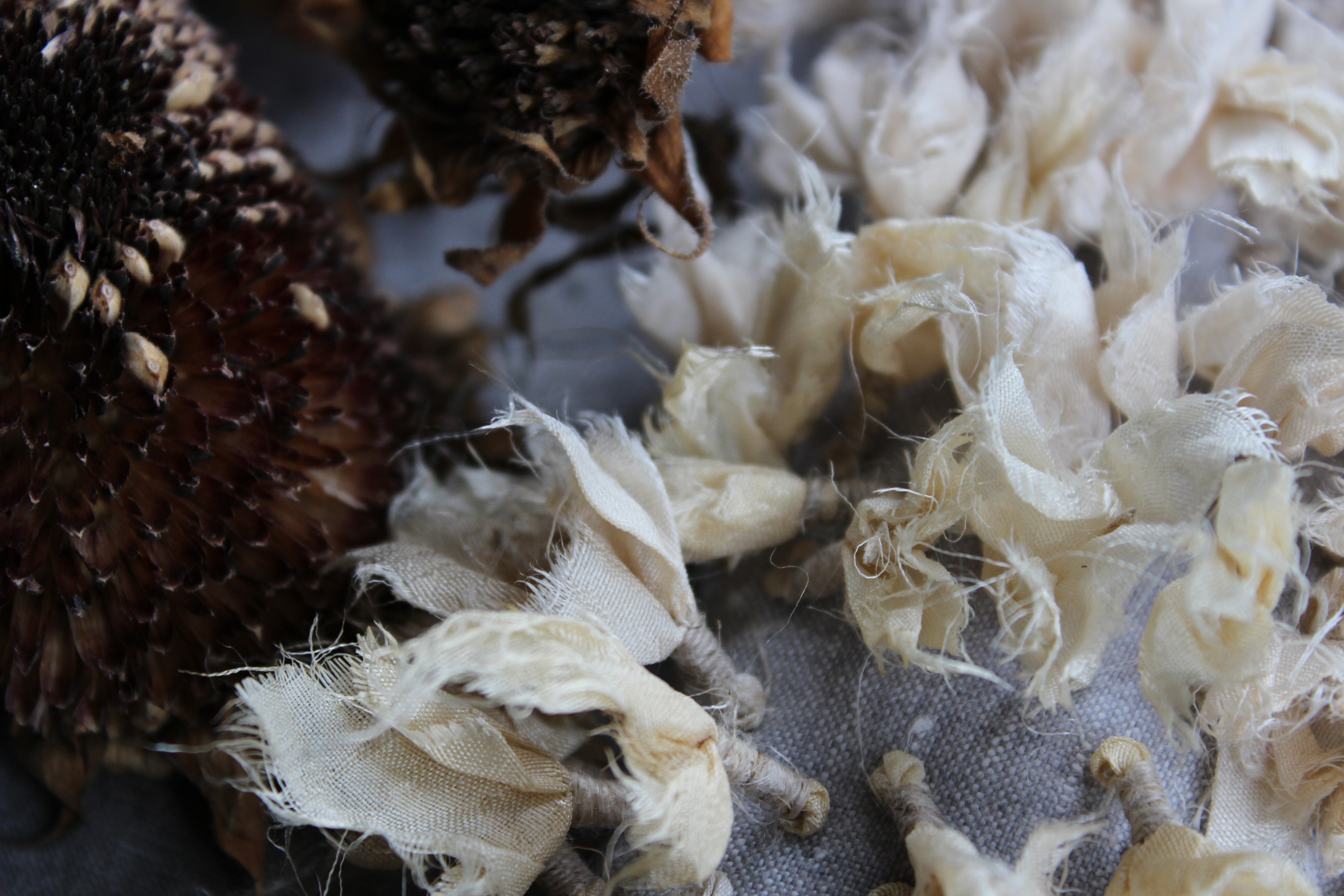
Many of you know that I used to be a fashion and costume designer, but before that I studied Constructed Textiles in Scotland. I specialised in knitted textiles, which is what led to me being a knitwear designer, but even before that I would begin every project by working with what is commonly known as “mixed media textiles”. Although, to be honest, that title doesn’t quite describe the process. At the beginning of each college project, I would take cloth and yarn and make collages and forms that would help me explore the textures that I wanted to bring into my knitted work. More “manipulated textiles” than “mixed media”.
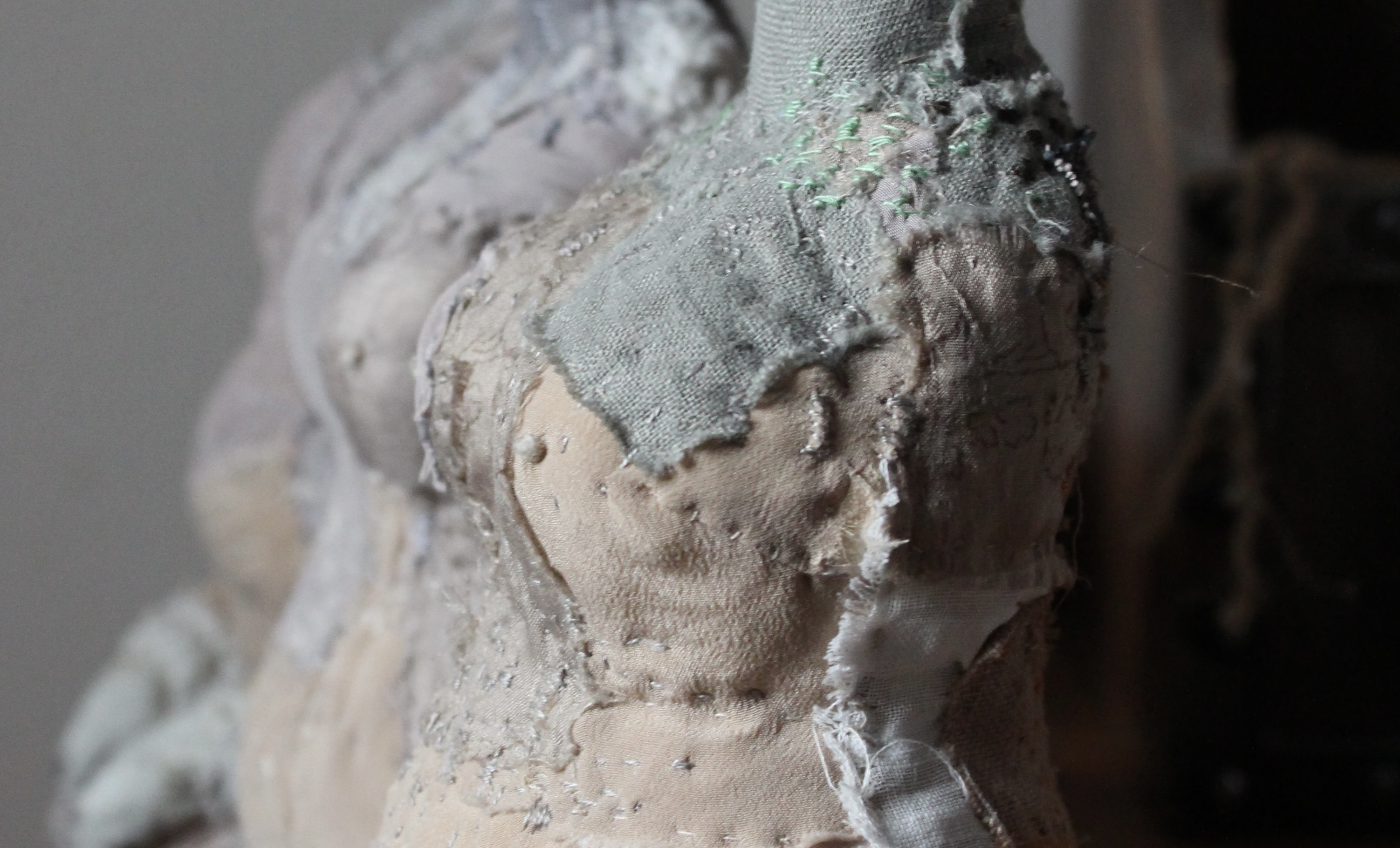
And that’s what this course is going to be all about. Up until the last few years, manipulated textiles were a decorative aspect of my doll work. They were added on at the end of the design process. Since that trip to Chiapas, they’ve become the root of my work, an integral part of the design process, and if I’m going to be completely honest, a midnight compulsion.
There’s something incredibly soothing about the repetition of stitching, layering and twisting. The process of making a hundred tiny elements and arranging them, composing them across a doll form. Sometimes they create the impression of fur, feathers, or scales. Sometimes they can express the feeling of a character so clearly that there’s no need for facial features to bring the doll to life.
And that’s what we’re going to be working with on this course.
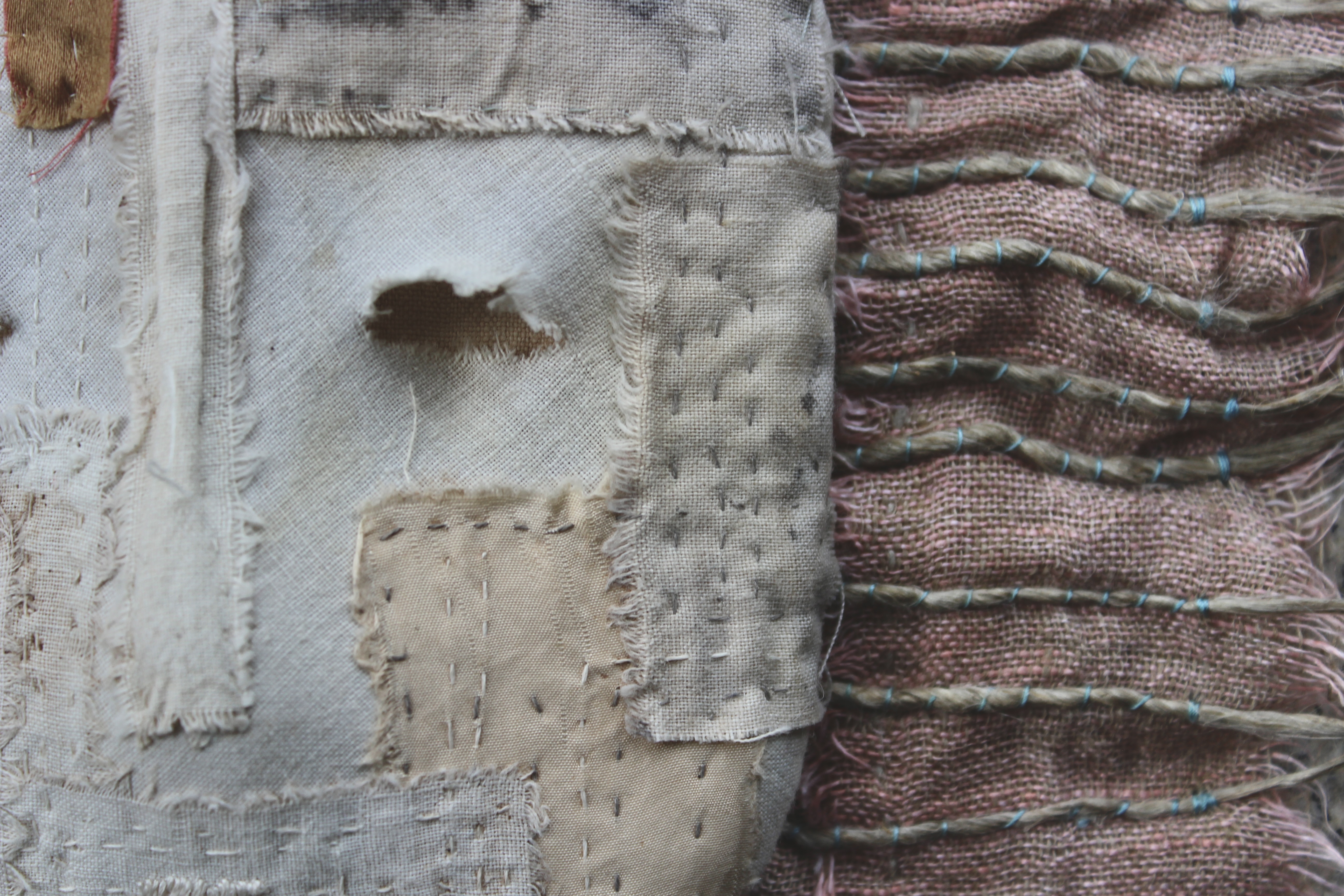
In this course we’re going to be working with manipulated textiles for doll making, soft sculpture and collage. In fact, you can apply your textile designs to, well, anything you like. I will share many of the processes that I use in my own textile work, giving you the building blocks to create textiles that are unique to you and your art.
I’ll be guiding you to create simple forms that can be layered into complex structures and patterns. We will learn to identify, build and work with a texture palette that’s unique to you and your environment. We will learn to express character through texture, and explore how the haptic qualities of your materials bring that character to life. As always, the focus will be developing and strengthening your own unique creative voice in a way that you can bring into your own art practice for years to come.
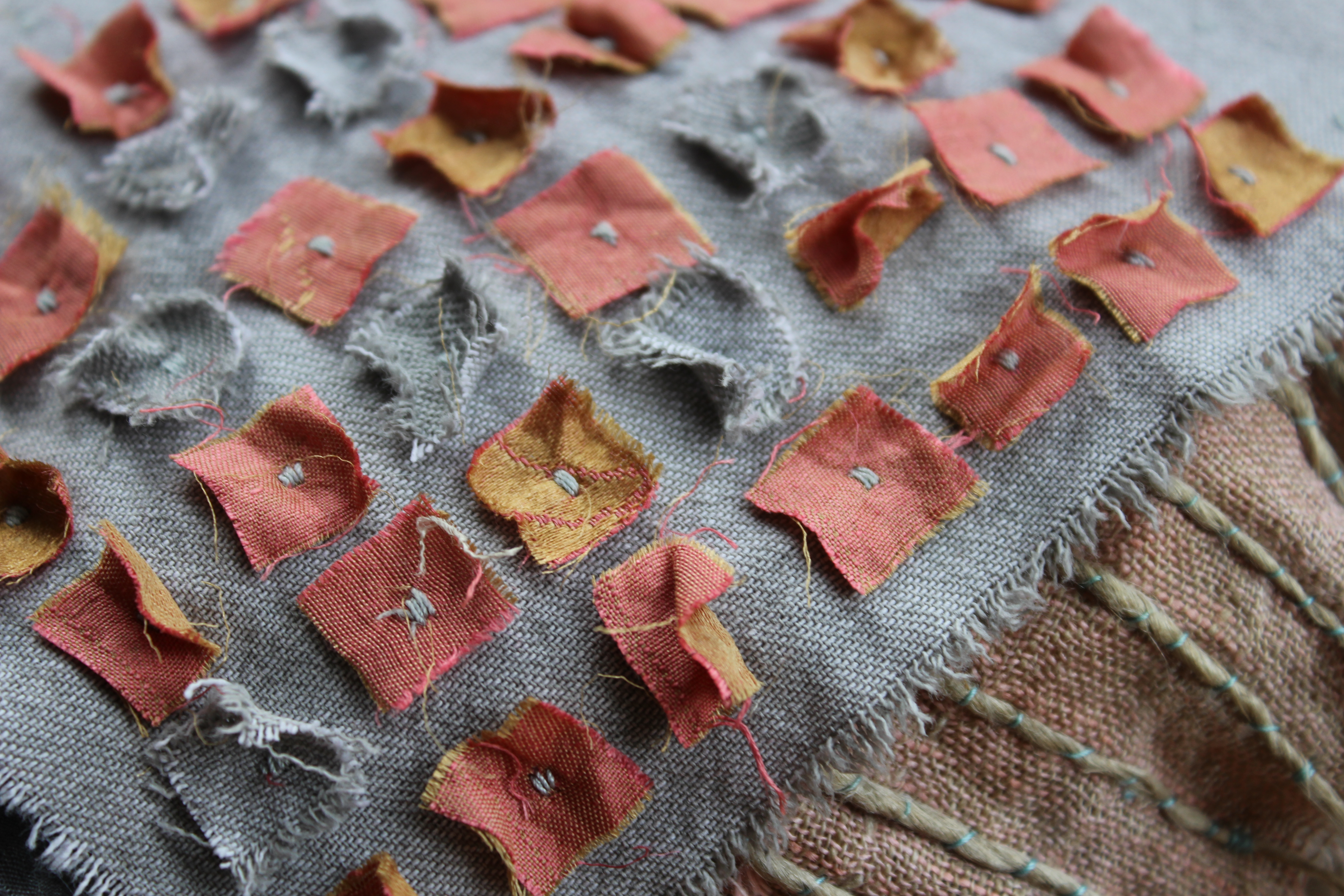
And, as always, there will be a few educational curve balls to open up creative possibilities and keep things playful and curious.
We will be working with;
- Drawing ( yes you can draw!).
- Photography.
- Reflection exercises.
- Developing your own textile structures and motifs to create detailed forms and patterns.
- Layering, twisting, wrapping, binding, deconstructing, fraying, stitching, tearing, folding, tucking, quilting, fringing, and probably other things that I’ve forgotten about.
- Identifying what textures and forms resonate with you and your art work.
- Developing a texture palette that’s unique to you and your projects.
- Building structures and rituals that support your art practice.
- Understanding the characters you create in your doll work.
- Composing textiles to create dolls, three dimensional forms or collages.
- Exploring repetition and composition.
- Honing your sewing skills.
- Building collections of technical and creative experiments to hone and develop practical skills.
- Finishing processes that make your textile work look professional and cohesive.
We will not be working with;
- Tailoring ( advanced pattern cutting )
- Needle felting ( I’m using this a lot in my own work, but it’s not something I am ready to teach remotely)
- Birds’ heads
- Dolls that are free standing
I feel I need to make this really clear so that you know exactly what you’re signing up for. There will be no bird heads and no free standing dolls. Both of these are complex and way beyond the scope of this or any other correspondence course I teach. Please respect that these aspects of my personal work will not be covered in this course.
Is this a Digital Course?
No. You will receive all of your lessons directly via email from me. I send every single email personally. Nothing is automated and nothing is downloaded from the internet. There are no video tutorials, no pre-recorded messages and absolutely no pre-written email responses. Think of this as an old fashioned correspondence course that’s being delivered by email. Throughout the course, you can email me for regular private tuition, or work entirely independently. Our interactions will be one to one, and private, not on a social media platform. I always choose to teach courses that are not social media dependant, and although there are many incredible digital courses out there, this particular one is designed to be worked on offline.
What previous experience do I need to take part?
This course is open and suitable for all levels of participants, whether you’re a complete beginner or an experienced artist. The course sits well alongside all of my other courses, however it is not necessary to have previous experience of working with me to take part. Some previous experience of sewing or working with fabric and yarn will be beneficial, but is not strictly necessary.
How much time will I have to commit to the course?
You’ll receive ten lessons in total – two a week for five weeks. You can work at your own pace as all lessons are emailed in PDF format by me personally, and you can work through them as quickly or slowly as you like. I keep class numbers small enough to allow for one to one email tuition with every student. You can choose the amount of tuition you prefer. Some participants like to work with me regularly, some prefer to work alone, it’s entirely your choice.
What’s the course fee?
As always, that’s up to you. I’m offering this course on a “pay-what-you-can” basis, with a minimum of £60 and a maximum of £120. I know that many are struggling with financial stresses and I hope that the range of fee options makes the course more accessible. There is no need to justify or explain how much you’d like to pay. Regardless of what you can afford to pay, you’ll receive the same lessons and support as anyone else.
What materials will I need?
As with all the courses I offer, the materials needed for the course are all inexpensive, easy to find, and you will be given plenty of time to get them ready for each part of the course.
How many places are there?
I limit the places on the course to the number of students I can comfortably connect with over the duration of the course so I can offer one to one email support for those who would like or need it. This is not a course where students are flying solo and the teacher has no real connection with anyone. Unfortunately this means that there are never enough places to meet demand, and that available places fill up very quickly. If you miss out on a place this time around, please get in touch and I may be able to add you to the cancellation waiting list.
How long does the course last?
The course will begin on Monday the 26th of October and run for four weeks. Lessons will be sent on Monday and Thursday afternoons. You can work at your own pace and all of the lessons will be emailed directly to you so you can access them when ever you need to.
How do I join the course?
You will be able to sign up for the course from Sunday the 18th of October, at 8pm ( United Kingdom time) by clicking on the button below.
I cannot offer tuition for any projects that are not covered within the course material. I can however, offer individual, heart felt tuition for the projects and lessons within the course. Please respect that I will not be teaching how to make specific dolls from my collection.

